
Stress and Suffering: Key Differences
Understanding Stress vs. Suffering
Life can be challenging, and stress is often a part of daily life. However, just because stress is unavoidable does not mean we have to suffer because of it. Understanding the difference between stress and suffering is crucial for our mental and emotional health.
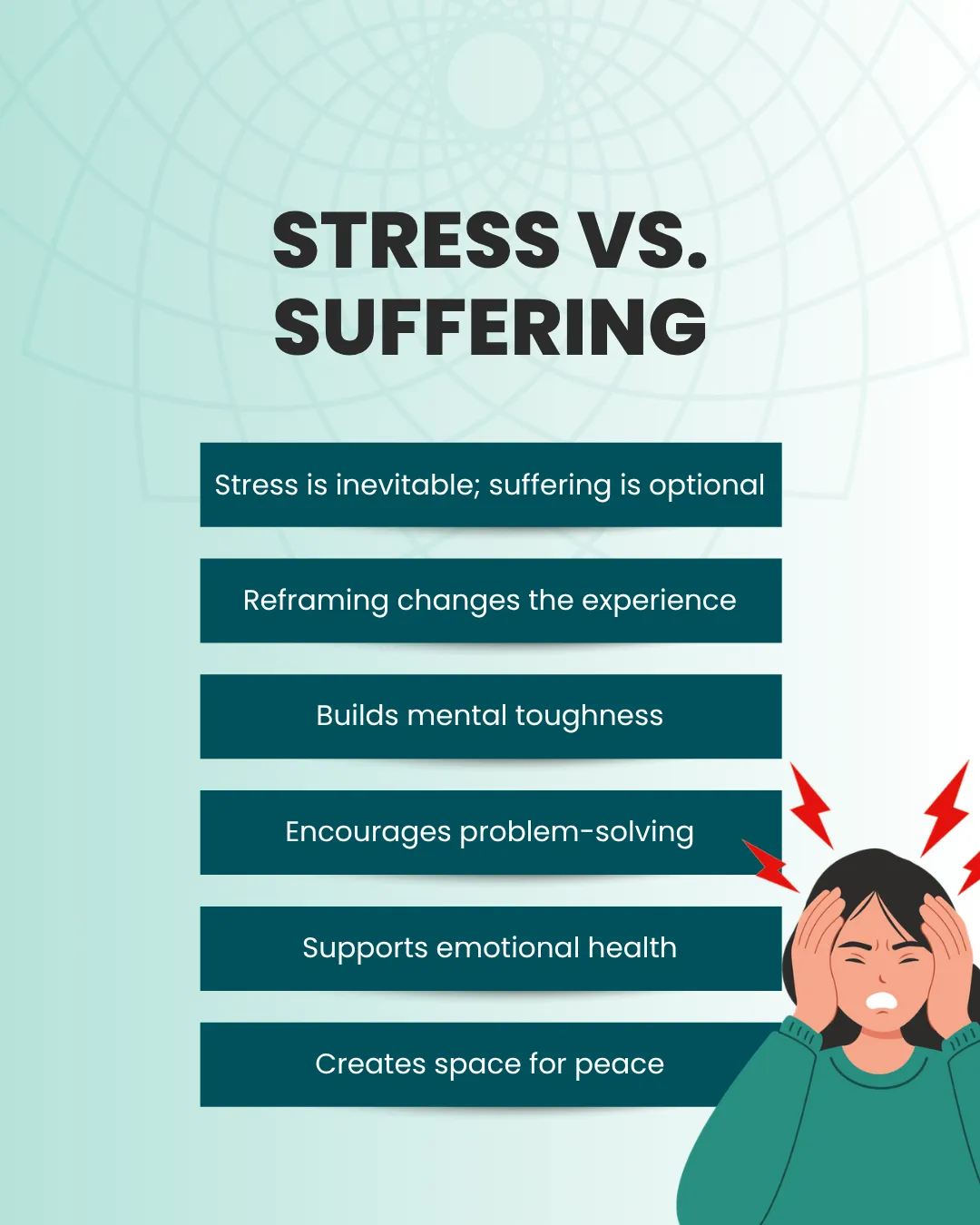
1. Stress is Inevitable; Suffering is Optional
Everyone experiences stress, whether it's from school, work, or personal responsibilities. Stress is a natural response to challenges. However, suffering is what happens when we let stress control our lives. By recognizing that suffering is optional, we empower ourselves to make different choices.
2. Reframing Changes the Experience
How we view stress can significantly impact our experience. By reframing our thoughts, we can change how stress affects us. For example, viewing a challenge as an opportunity for growth instead of a threat can shift our mindset, making stress more manageable.
3. Builds Mental Toughness
When we handle stress effectively, we build mental toughness. This resilience helps us face future challenges with more strength and confidence. Over time, managing stress can make us stronger and better equipped to handle whatever comes our way.
4. Encourages Problem-Solving
Stress can be a powerful motivator to solve problems. When faced with a stressful situation, we often look for solutions to alleviate that stress. This focus on problem-solving not only reduces stress but also enhances our critical thinking skills.
5. Supports Emotional Health
Understanding and managing stress is vital for maintaining our emotional health. When we manage stress, we are less likely to experience negative emotions like anxiety or depression. This emotional stability contributes to overall well-being.
6. Creates Space for Peace
When we actively manage stress, we create a space within ourselves for peace. With less suffering, there is more room for joy and contentment. By choosing how we respond to stress, we allow ourselves to live more peaceful and fulfilled lives.
Practical Tips to Manage Stress
- Practice Mindfulness: Spend a few minutes each day focusing on your breathing or meditating.
- Stay Active: Regular physical activity can help reduce stress levels.
- Talk it Out: Sharing your feelings with a friend or counselor can offer new perspectives.
- Set Realistic Goals: Break tasks into smaller manageable steps rather than overwhelming yourself.
- Get Enough Sleep: Quality sleep is vital for stress management and emotional health.
Conclusion
While stress is an inevitable part of life, suffering is a choice we make. By reframing our thoughts, building resilience, and fostering emotional health, we can manage stress effectively. Doing so not only reduces suffering but also opens up space for peace and happiness in our lives.