
Mastering Life: Control What You Can
Mastering Life: Control What You Can
Life is full of unexpected twists and turns. Some things are beyond our control, but what if we focused on the things we can control? By doing so, we can improve our mental and emotional well-being.
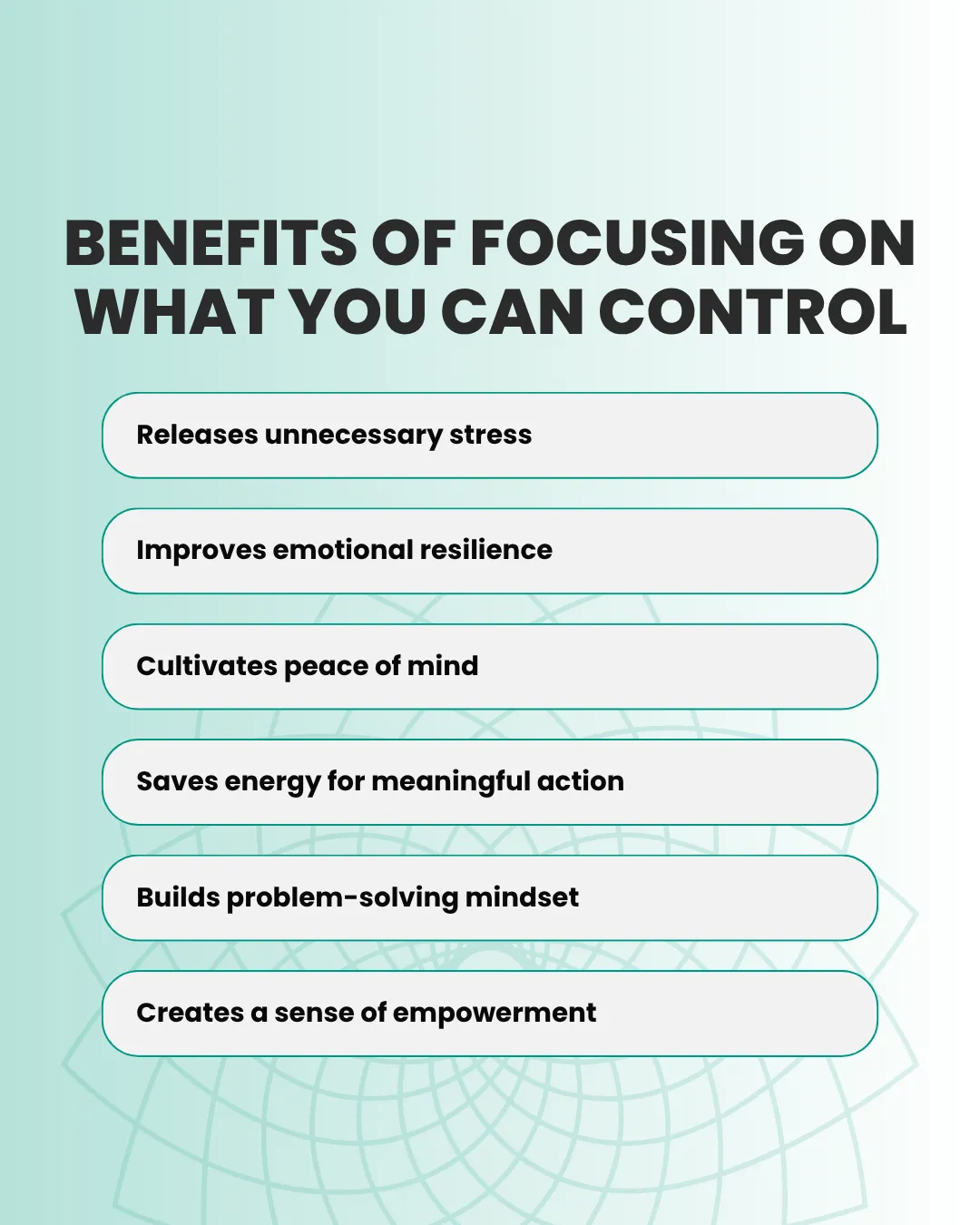
Benefits of Focusing on What You Can Control
Focusing on controllable aspects of life is not just a catchy phrase. It has real benefits that contribute to a healthier, more balanced life. Let's explore these benefits in detail.
1. Releases Unnecessary Stress
Stress can often arise from worrying about things we cannot change. By shifting focus to what we can control, we let go of unnecessary stress and feel more at peace.
2. Improves Emotional Resilience
Emotional resilience is the ability to bounce back from setbacks. When you focus on control, your emotional strength grows, making it easier to handle life's challenges.
3. Cultivates Peace of Mind
Peace of mind is about feeling calm and content. It is achieved by letting go of chaotic thoughts and concentrating on controllable aspects, leading to a quieter mind.
4. Saves Energy for Meaningful Action
Our energy is precious. When spent on things we cannot control, it feels wasted. Saving it for actionable steps ensures our energy leads to productive outcomes.
5. Builds a Problem-Solving Mindset
Focusing on controllable factors encourages a mindset geared toward problem-solving. It becomes easier to find solutions, leading to successful outcomes.
6. Creates a Sense of Empowerment
Empowerment comes from feeling in control of your life. When focused on what we can manage, we feel empowered to make changes and improvements in our lives.
How to Focus on What You Can Control
Now that we understand the benefits, let's talk about how to concentrate on the controllable aspects:
- Identify Controllable Aspects: Make a list of things you can control, such as your actions, thoughts, and reactions.
- Shift Your Mindset: Practice shifting your thoughts from uncontrollable to controllable matters.
- Set Realistic Goals: Goals should be achievable and within your control. Focus on steps you can take to accomplish them.
- Practice Mindfulness: Being present helps in directing focus to the here and now, reducing anxiety over uncontrollable future events.
- Stay Adaptable: Flexibility in thinking allows for adjustments when facing new information or challenges.
Conclusion
Focusing on what you can control is a powerful tool for improving mental health and overall well-being. It enables us to handle life's challenges with greater ease and confidence.
Remember that it's a journey. Start small and gradually shift your focus to what you can control. The benefits will unfold as you practice.