
Is Your 'Healthy' Food a Hidden Trigger?
Introduction
Have you ever considered that your go-to "healthy" foods might be causing more harm than good? While the idea may seem surprising, it’s an important consideration for anyone aiming for optimal health. This brings us to the concept of bio-individuality and personalized nutrition. So, let’s dive into how some foods like eggs and spinach can be unexpected triggers and why understanding your body’s unique needs is crucial.
Identifying Hidden Culprits
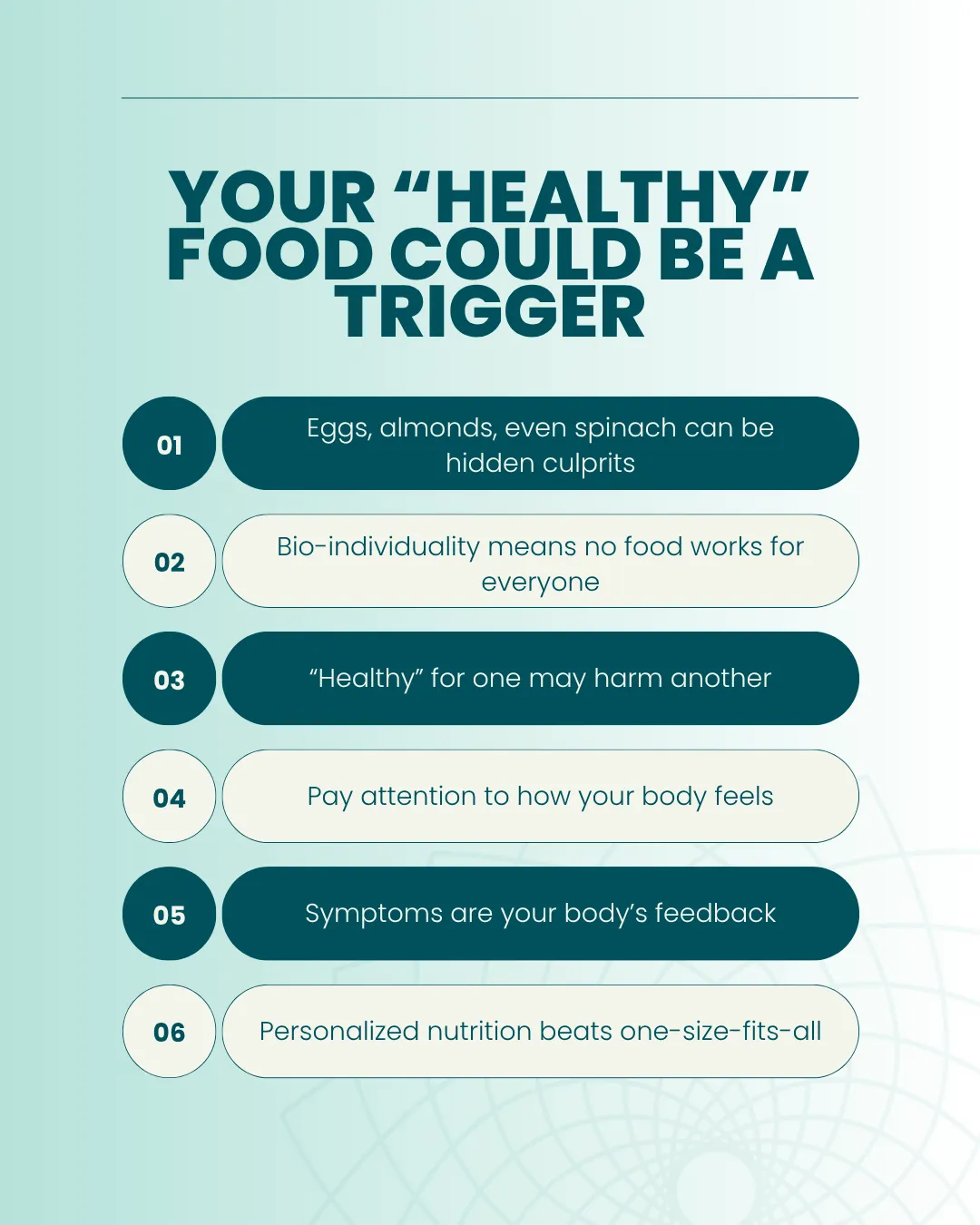
Most people agree that foods such as spinach, eggs, and almonds are healthy. They are rich in nutrients, contributing to a balanced diet. However, these foods can sometimes act as hidden culprits, leading to allergic reactions or causing other adverse symptoms.
- Spinach: Known for its iron and vitamin content, it can cause issues due to its high oxalate levels, leading to kidney stones in some people.
- Eggs: A great source of protein, but for some, they may cause allergic reactions or digestive problems.
- Almonds: Although packed with healthy fats, they can be hard to digest and may trigger allergies.
Understanding Bio-Individuality
Bio-individuality means that no single food or diet works universally for everyone. Our bodies are unique, and what helps one person might harm another. Consider these key points:
- Your metabolic rate, gut health, and genetics influence how your body reacts to certain foods.
- Environmental factors, stress, and lifestyle also play roles in determining ideal nutrition.
- Listening to your body’s signals can lead to better dietary choices.
When "Healthy" May Harm
It’s crucial to keep in mind that "healthy" is not a one-size-fits-all term. An apple a day might not keep the doctor away if apples cause gastrointestinal distress for you. It’s about finding what truly works for you.
Listening to Your Body
Your body is continuously providing feedback about what foods work well and which do not. Here’s why paying attention is important:
- Recognizing symptoms like bloating, fatigue, or headaches after eating can reveal food sensitivities.
- Keeping a food diary helps in tracking patterns and reactions to different foods.
- Noticing how your body responds allows you to make informed dietary adjustments.
Symptoms: Your Body’s Way of Communicating
Symptoms are clues from your body about its internal state. Whether it’s an energy dip, mood change, or skin issue, these are important indicators. By recognizing these, you can adapt your diet accordingly:
- Energy levels: Notice which foods give you sustained energy.
- Mood: Pay attention to mood fluctuations which could be diet-related.
- Skin: Monitor skin conditions as they often reflect nutritional imbalances or sensitivities.
Embracing Personalized Nutrition
Personalized nutrition emphasizes individual differences in dietary needs. Here’s why it’s effective:
- Customized plans focus on individual health goals.
- Adaptive strategies allow modifications based on feedback from the body.
- Added support from nutritionists can guide effective changes through personalized plans.
Conclusion
The journey to better health might involve rethinking what’s commonly perceived as "healthy." By understanding your unique nutritional needs and being responsive to your body’s signals, you can create a diet tailored to you. It’s about finding a balance that ensures you thrive and enjoy a healthy, energized life.