
The Essential Role of Fiber in Detoxing
The Essential Role of Fiber in Detoxing
In the quest for better health, detoxification plays a crucial role. Detoxing might sound like a difficult process, but it can be simple and effective when aided by the power of fiber. Fiber is not only essential for digestion but is also a key player in detoxification, supporting overall well-being.
What is Fiber?
Fiber is a type of carbohydrate that the body cannot digest. It is found in plant foods such as fruits, vegetables, grains, and legumes. There are two main types: soluble and insoluble fiber. Soluble fiber dissolves in water to form a gel-like substance, while insoluble fiber adds bulk to stool, aiding in smoother digestion.
How Fiber Aids Detoxification
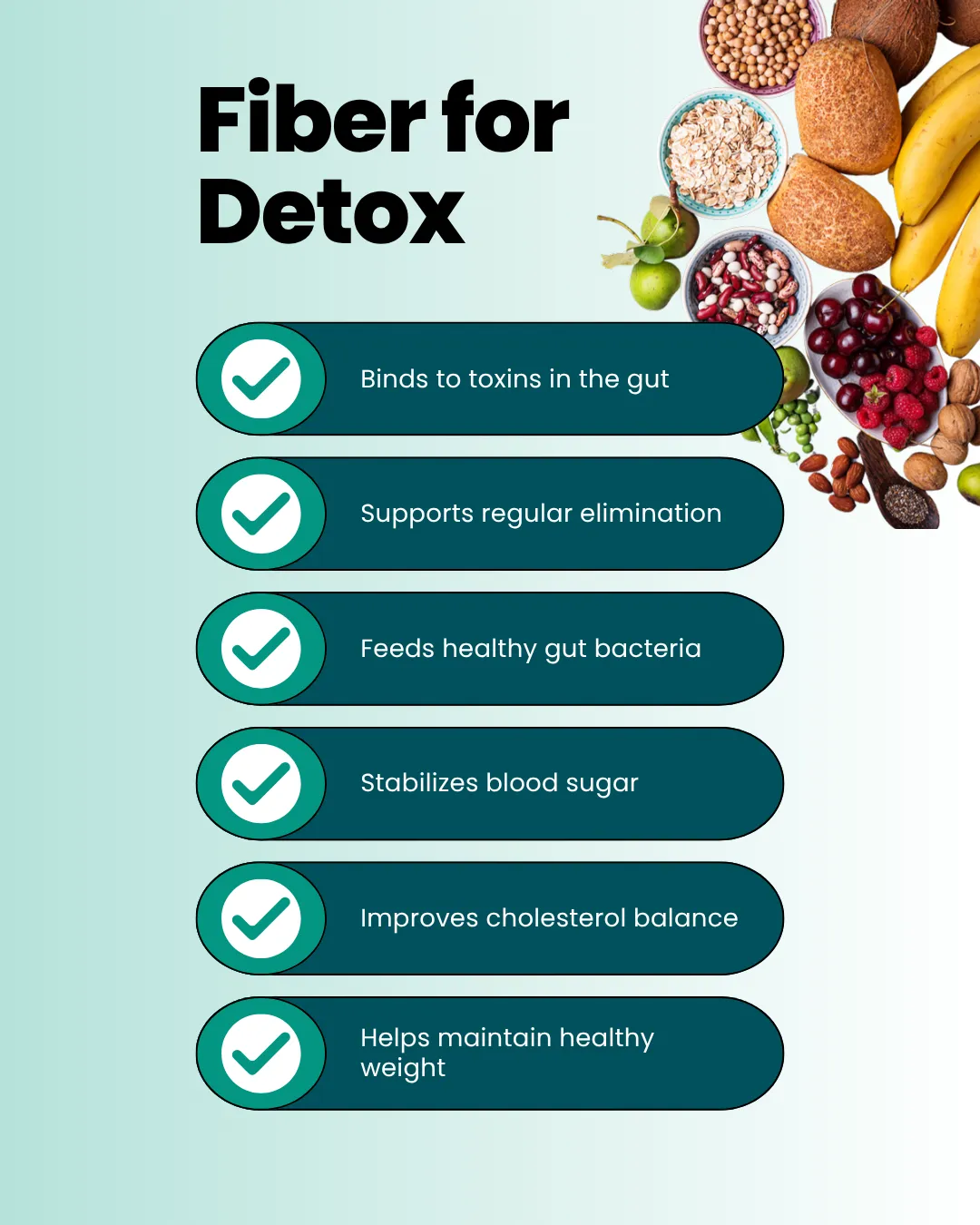
- Binds to Toxins in the Gut: Fiber can bind to toxins and other waste products in your gut, helping to eliminate them from the body. This prevents toxins from being reabsorbed into your bloodstream.
- Supports Regular Elimination: Fiber helps in regular bowel movements by adding bulk to the stool and speeding up its passage through the digestive system.
- Feeds Healthy Gut Bacteria: Your gut is home to millions of bacteria, some of which are beneficial. Fiber acts as food for these good bacteria, supporting a healthy gut environment.
- Stabilizes Blood Sugar: By slowing down the absorption of sugar, fiber helps prevent spikes in blood sugar levels. This can be especially helpful for people with diabetes.
- Improves Cholesterol Balance: Soluble fiber binds to cholesterol particles, helping to remove them from the body and improving heart health.
- Helps Maintain Healthy Weight: High-fiber foods are more filling, which can help control the amount you eat. This is a key factor in weight management.
Incorporating Fiber into Your Diet
- Start Your Day with Fiber: Begin your day with a breakfast rich in fiber. Consider oatmeal, whole-grain cereals, or smoothies with fruits like bananas and berries.
- Choose Whole Grains: Opt for whole-grain bread, pasta, and brown rice instead of their refined counterparts. Whole grains retain all parts of the grain, including the fiber-rich bran.
- Snack on Fruits and Vegetables: Have fruits and vegetables as snacks throughout the day. Apples, pears, carrots, and celery sticks are great choices.
- Add Legumes and Nuts: Incorporate beans, lentils, and nuts into your meals. They are not only fiber-rich but also offer other essential nutrients.
- Stay Hydrated: Drinking water helps fiber do its job better. Hydration ensures that fiber can be effective in moving waste through your digestive system.
The Bottom Line
Including fiber in your diet can bring numerous health benefits, from aiding in detoxification to supporting a healthy weight. By making simple dietary adjustments, you can enhance your digestive health and contribute to overall wellness. Remember, it's always best to increase fiber intake gradually and consult a healthcare professional if you have any concerns.